A Book Week costume 48-hour plan: keep the important choices reversible
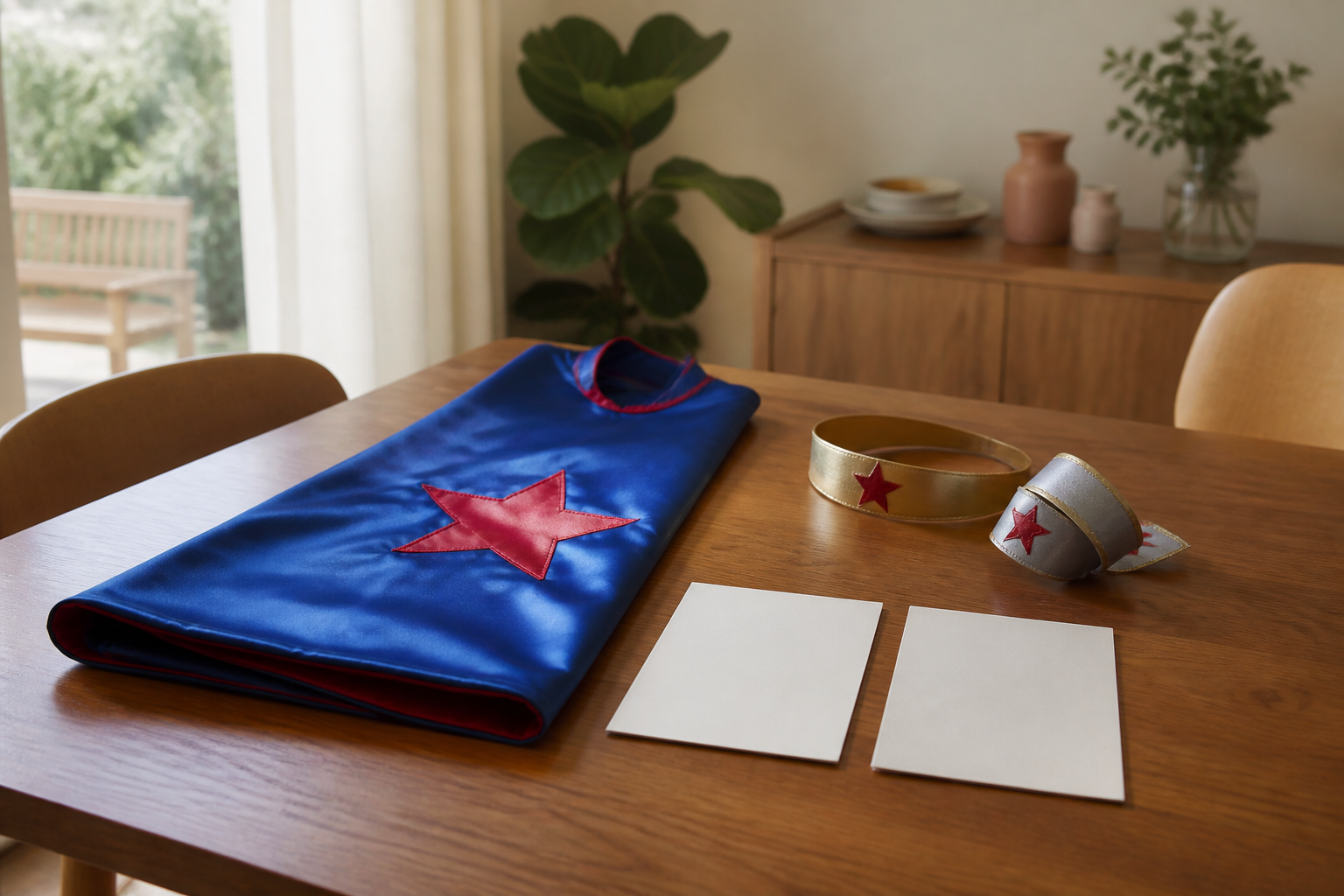
The two days before a Book Week activity can make every costume choice feel urgent. Usually, only a few decisions really need to be settled early. The rest can stay open until the school requirements and your child’s preference are clearer.
A calm plan separates the questions that need an answer from the extras that can wait. It is not a delivery countdown or a long packing list. It is simply a way to avoid locking in pieces before you know whether they are needed.
At 48 hours: pull out the questions that only the school can answer
Read the school notice and make a short list of the practical facts it gives you: when the activity happens, whether children are changing clothes, and any stated limits. If a rule is vague, make a note to ask rather than filling the gap with an assumption.
Keep that list separate from the costume idea. A child may be excited about a cape, hat or prop, but the school’s directions come first. Knowing the activity’s shape makes it easier to decide which parts need to be worn and which can remain optional.
Choose one main clue, not a full set of decisions
Next, agree on one character clue that your child is happy to use. It could be a cape, a colour, a crown, a hat or another simple detail. One cue gives the idea a centre without forcing every accessory to be decided at once.
This leaves room for a child to change their mind. If the main clue still works, swapping or leaving out an extra does not undo the whole costume. That is kinder than treating every small piece as a final decision two days early.

At 24 hours: remove what does not earn its place
With the school directions in view, look at the optional pieces. Does each one help the character read clearly? Can the child manage it for the activity? Is it allowed under the school’s guidance? If the answer is not clear, leave it out until you can confirm it.
There is no need to turn the costume into a test of commitment. A main clue that works is more useful than several extras that require constant adjustment. A child can always add a small detail later if it is suitable and they still want it.
Before the day: let the child practise the explanation
Ask your child to show the main clue and explain the character in their own words. This is a simple check that the idea makes sense to them. It also gives you a last chance to spot a question for the school before the activity begins.
If the answer changes, that is fine. Go back to the one main clue and choose the least complicated version that still feels like their idea. The goal is a choice the child can own, not a perfectly fixed plan.
Browse only after the decision is clear enough
When there is a main clue and the school requirements are understood, Book Week Costumes is a place to explore possible main pieces. Check product titles and details against the school’s directions and your child’s actual plan.
If you are deliberately keeping extras to a minimum, Easy Book Week Costumes can help you look for a simpler direction. It does not replace checking the notice, nor does it make an item suitable for every school activity.
A two-day plan works best when it gives your family permission to keep the early choices small. Confirm what matters, choose one clear clue, then let the optional pieces remain optional.
FAQ
What should I decide 48 hours before Book Week?
Start with the school notice: the activity details, stated limits and anything you need to clarify. Then choose one main character clue rather than every accessory.
What can wait until the day before?
Optional extras can usually wait until the school requirements and the child’s preference are clear. Keep only the pieces that are useful and suitable for the activity.
What if my child changes their character idea?
Return to the main clue and choose a simple alternative. Keeping extras optional makes a change less disruptive because not every part of the costume has been fixed.
Should I confirm costume rules with the school?
Yes, when the notice does not answer a practical question. The school can clarify its own rules better than a general costume guide can.